

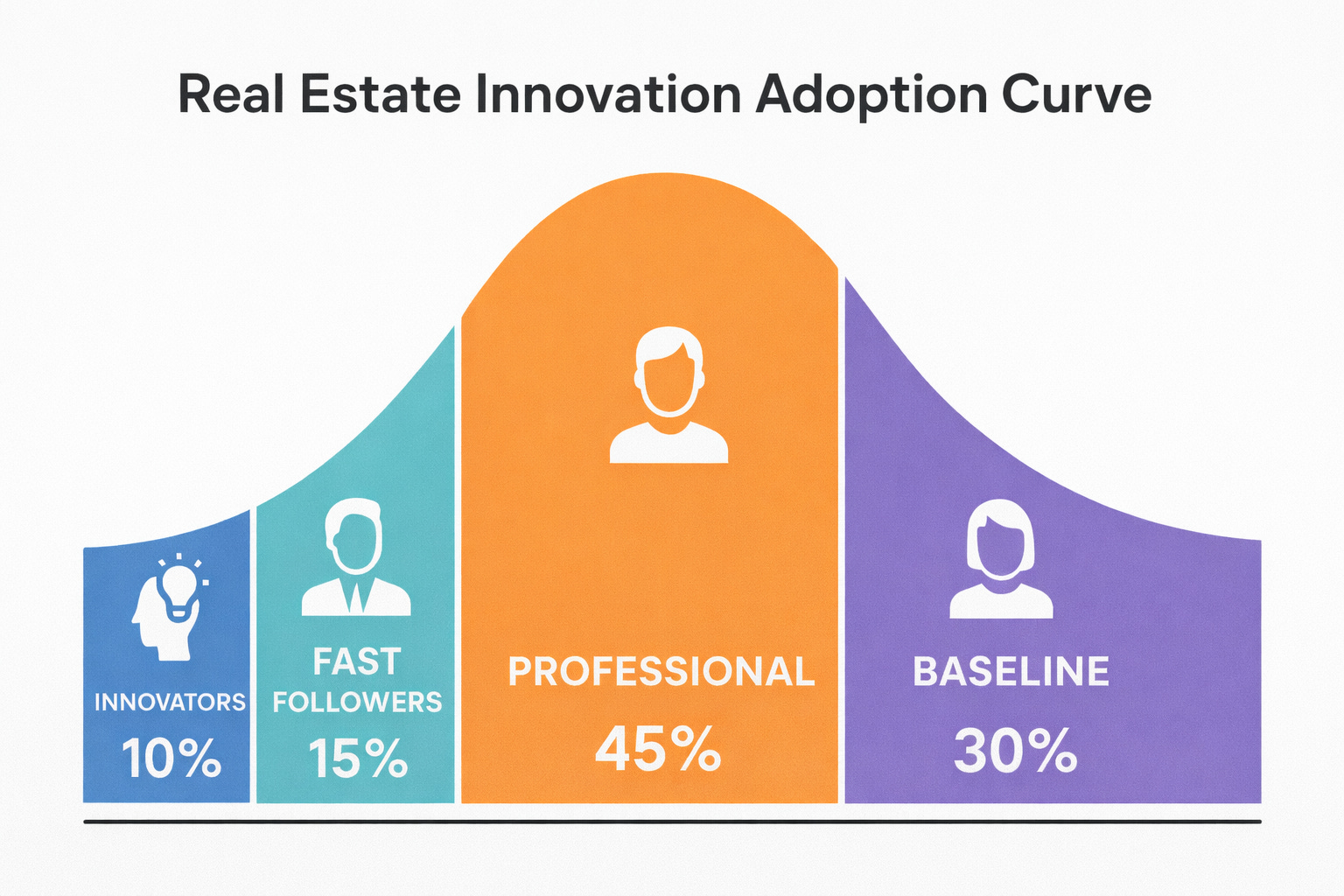
When we think about how work gets done within any company or organization, there is always an implicit flow of behavior that shapes company culture. Culture is often articulated by current leadership through lofty vision statements; however, in real estate, culture is frequently driven by the personality and temperament of the founding principals.
As real estate professionals, we are fiduciaries of investors’ capital. Depending on an investor’s risk–return profile—ranging from risk-averse to opportunistic—organizations operate very differently. Neither approach is right nor wrong; they are simply different choices that influence how a real estate organization operates and ultimately set the tone for its culture.
When reviewing, purchasing, and adopting any technology, it is imperative to understand your firm’s culture before prioritizing workflows and evaluating the technologies that support them. There is little value in assessing a solution built on a new or innovative paradigm if your firm is not ready, willing, and able to absorb the change it requires. With a clear understanding of how your firm operates—and its appetite for change—the process of reviewing technology becomes less daunting, more focused, and more likely to result in positive outcomes.
Below are the primary user profiles active in the market.
Baseline
Baseline users are the most conservative adopters of technology within the industry. These cultures tend to be risk-averse, comfortable maintaining the status quo, and focused on core investment strategies. Many are family-owned offices with long-tenured, loyal, employees who have held the same roles for decades. There is no need or interest to make a change typically until management changes generations.
Baseline users typically engage with technology years after a specific application has become widely adopted across society. Their current focus is on fundamental digitization tools. For them, technology primarily supports accounting, tenant screening, listing available units, collecting rent, paying bills, and basic communication with residents.
Professional
Professional users are intermediate adopters of technology. Most real estate organizations fall into this category. These firms are focused on income growth, asset appreciation, and meeting or exceeding approved budgets. Their level of innovation interest generally lags standards established in many other industries.
Professional users recognize and apply core management principles within their operations. For example, they understand that an improved tenant experience leads to higher lease retention, which in turn drives stronger economic occupancy and revenue. Technology is viewed as a tool for centralizing data to support operational decision-making, automating repeatable tasks, and enabling a more consistent and optimized tenant experience. Technology adoption is driven by management impact, provided there is a demonstrable return on investment to justify change.
Innovators
Innovators represent the most advanced technology users in the multifamily industry. They seek to apply technology to their operations in ways that meet or exceed standards set in other industries.
These firms view technology as a lever to achieve excess returns through new revenue streams, competitive differentiation, and reduced operating expenses. Innovators often serve higher-end tenants who expect best-in-class experiences and are willing to pay premium rents in exchange. The most sophisticated innovators recognize that technology can help uncover new ways to drive higher economic occupancy and, as a result, are more willing to reimagine processes and workflows to improve NOI.
Innovators also understand and actively manage the increased risk associated with adopting new technologies. They possess the emotional intelligence required to provide thoughtful, constructive feedback that supports product development—without requiring personal gain.
Fast Followers
Fast Followers are organizations that adopt or implement technology after seeing it deployed by large or well-known firms. They are often influenced by logos displayed on a vendor’s website without validating whether those firms are active or paying customers.
Because Fast Followers may not fully understand the rationale behind their purchasing decisions, they often struggle to evaluate whether a technology implementation was successful—or to diagnose why it failed. Frequently, the issue is not the technology itself, but a misalignment with the organization’s needs or culture. There is nothing inherently wrong with being a Fast Follower; however, for the purposes of our insight reports, we will not be prioritizing this group’s adoption concerns.